
Key Takeaways
Building your own brand gives you control, higher profits, and long-term equity but demands time and marketing effort.
Marketplaces offer speed and reach, but at the cost of visibility, control, and commissions.
Done for you platforms can offer a powerful hybrid model with certification, logistics, and brand alignment.
The smartest artists and galleries combine both: marketplaces for exposure and personal stores for depth and loyalty.
In 2026, selling art online is non-negotiable. The real question is: how?
Do you build your own brand or plug into a marketplace? That’s one of the main concerns when starting. Especially if you want to also aim for international customers.
In this guide we compare both paths (and maybe a better alternative), so you can choose what fits your vision, time, and goals.
Market Reality: How Businesses Actually Sell Online
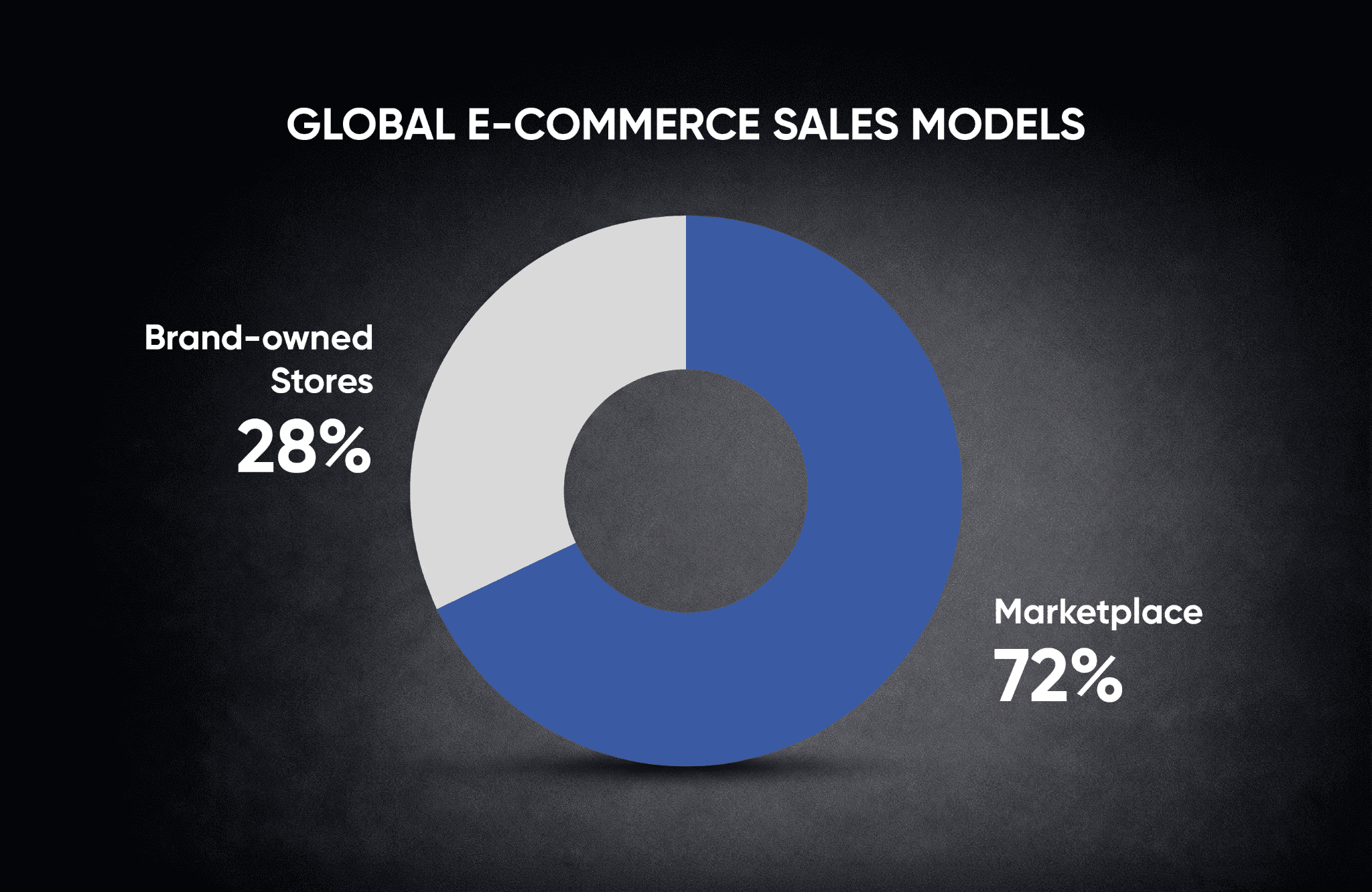
While there are many ways to sell online, global data shows that marketplaces dominate the majority of e-commerce revenue.
Recent industry analysis estimates that:
72% of global e-commerce revenue is generated through online marketplaces
28% comes from independent online stores owned by brands or creators.
(Reference Link): https://ecdb.com/blog/marketplace-vs-online-store/5086
In other words, art marketplaces such as Saatchi Art or Artsy capture most transaction volume, largely because they aggregate demand and attract massive buyer traffic.
However, independent stores remain essential for brand building, customer relationships, and long-term value.
That is why many businesses combine both approaches: marketplaces for discovery and sales volume, and brand-owned stores for deeper relationships with collectors.
Option 1: Building Your Own Brand: The Independent Route
What It Means
Creating your own e-commerce store, typically through platforms like Shopify, WooCommerce, or Squarespace, means you control everything: design, pricing, customer experience, marketing, and branding.
Pros
Full creative control over your visual identity, pricing, and storytelling.
Higher profit margins since you avoid third-party commission fees.
Direct customer relationships enabling loyalty, re-marketing, and recurring sales.
Freedom to integrate tech, such as blockchain certification for provenance.
Cons
Requires upfront setup time and basic web-building skills (or hiring help).
You’re fully responsible for driving traffic through SEO, ads, and email marketing.
Managing logistics including packaging, shipping, and returns falls entirely on you.
Building brand trust takes time, especially with first-time buyers.
Who It’s For
This path suits artists or galleries with:
A clear visual identity and brand message
Motivation to build long-term equity in their name
Willingness to invest time or budget into learning digital tools and marketing
Example: Romero Britto Official Shop (using Shopify)
A real example of the “build your own brand” route is Romero Britto’s official online shop. Instead of relying only on a third-party marketplace, Britto sells fine art, limited edition prints, sculptures, and related products through his own branded storefront. That makes it a good example of the Shopify-style model: the artist controls the brand environment, product presentation, and customer journey on a dedicated store rather than inside a multi-seller marketplace.
Option 2: Selling Through a Marketplace (Plug Into an Ecosystem)
What It Means
Online art marketplaces such as Saatchi Art, Artsy, and others offer ready-made platforms to upload and sell your work. Some cater to physical art, others to digital or collectible categories. A newer category includes done for you marketplaces that manage sales, logistics, and even marketing on your behalf (more on this later).
Pros
Instant access to an audience of art buyers already browsing.
No technical setup required, just upload your art and start selling.
Many handle payment, shipping, and even returns.
Great for testing the waters or building exposure.
Cons
Commissions can range from 15% to 50%.
Less control over how your work is displayed or discovered.
Brand dilution where buyers often remember the platform more than the artist.
Saturation can be a challenge since you’re one of thousands, making visibility harder.
Who It’s For
Marketplace platforms suit:
Newer artists testing demand
Sellers with limited time or tech experience
Artists who want a secondary revenue stream without managing a full store
Example: Saatchi Art
A clear example of the marketplace model is Saatchi Art. It offers artists access to an existing global buyer audience through a ready-made platform where artworks can be listed and sold without building a store from scratch. That makes it useful for exposure and faster market entry, though the tradeoff is less control over the buying environment and brand experience.
Wouldn't it be nice to have a 3rd option? Something that blends the best part of each model? Well, there might be.
Option 3: Brand-Led Managed Commerce (A White-Label Marketplace Model)
Unlike traditional marketplaces such as Saatchi Art, where the platform owns most of the buyer relationship, some platforms allow artists, galleries, or brands to keep their own identity while outsourcing the infrastructure behind the sale.
In this model, the marketplace is not the main brand. Instead, the artist or gallery remains at the center, while the platform provides the tools and operations needed to sell professionally.
Features may include:
Dedicated artist or gallery pages that feel like their own branded store
Managed logistics including printing, shipping, and packaging
Marketing support and access to international buyers
Integrated blockchain certification for provenance and resale royalties
Customer relationships and collector trust remain tied to the artist or gallery, not only to the platform
These platforms are ideal for:
Galleries managing multiple artists
Creators scaling up their business
Sellers seeking trust, automation, and control
Example: B-OWND / marketplaces powered by Startrail
A good example of this model is B-OWND together with infrastructure such as Startrail. Unlike a traditional marketplace, the goal is not only to list works alongside thousands of others. Instead, the platform helps galleries and artists maintain their own identity, collector relationships, and long-term value while still benefiting from outsourced logistics, certification, and sales support.
Choosing the Right Path for You
Ask yourself:
Do you want to build a brand or simply sell your work?
How comfortable are you with tech and digital marketing?
Are you selling one-of-a-kind originals, prints, or collectibles?
Do you value ownership and data, or ease and speed?
There’s no “one size fits all” answer. Many artists start on marketplaces, then graduate to their own store. Others blend both, using marketplaces to generate leads and directing serious buyers to their branded site.
In 2026, the best strategy is the one that lets you grow sustainably while maintaining trust, identity, and creative freedom.