

Key Takeaways
Value continues after the first sale.
Relationships, usage, and resale drive recurring revenue.
Provenance turns trust into infrastructure.
Royalties require enforceable rules.
Art is shifting from products to assets.
The art market is still large, but can sellers still comfortably rely on isolated transactions?
According to the 2026 Art Basel and UBS Global Art Market Report, global art sales reached approximately $59.6 billion in 2025, up from $57.5 billion in 2024. On the other hand, online art sales fell to around $9.2 billion, an 11% year-over-year decline.
Source: Art Basel and UBS, Reuters
This doesn’t mean that people have stopped buying art, but that the economics of selling art are changing, becoming more demanding. Buyers are more selective, online growth is less automatic, and sales requires more trust and context.
For artists, galleries, or other sellers of cultural assets, this creates a structural problem. A one-time sale may generate quick revenue, but at the same time, it also ends the commercial relationship too quickly. The seller receives the payment, the work changes hands, and the future value of that work will often continue off the hands of the creator.
That’s why in recent years more and more art sellers are trying to solve that problem by moving beyond the single transaction. Not by abandoning sales, but by building revenue models around the longer life of the artwork.
In this article we’ll explore how the market is reacting to this shift, and what measures are being taken.

While a one-time sale captures value at one moment in time, art does not necessarily stop accumulating value after it is sold. In fact, more often than not, it’s just the first step.
A work may later enter an important collection, appear in exhibitions, be resold, increase in value as the artist’s reputation grows...you get the point. Yet in many cases as time passes, those who created the work or helped create that value are no longer connected to the asset, so as unfair as it might be, they won’t be benefiting from that increase in value.
This is why in this era of constant, fast communication, recurring revenue is becoming more and more relevant in the art market, just like in many others.
In particular, for art sellers, recurring revenue can come through means like memberships, licensing, leasing, resale participation, digital certificates, or long-term collector relationships, among other methods.
The common idea is the same: the first sale is just that, the first one. For the collector, this means the entry point into the artist’s world. For the artist or seller, it is the opportunity to start a longer relationship, one that creates further opportunities for engagement, trust, and future monetization.
From collectors attention to ongoing relationships
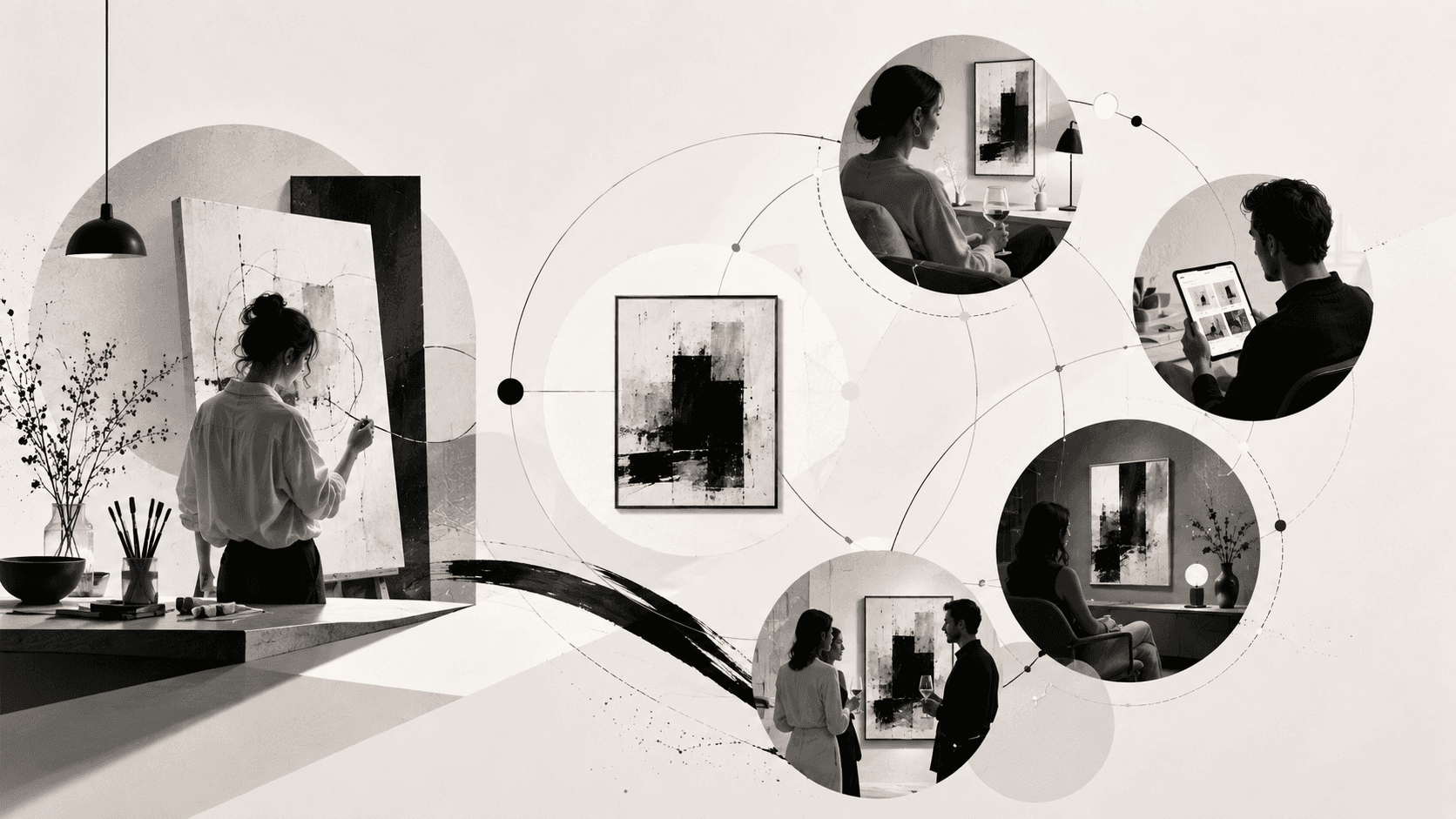
One of the most interesting shifts in the traditional model of selling as a creator is the move from “selling only finished works” to “monetizing ongoing relationships”.
In this era of social media, for many artists their online presence is key. With an audience, artists can create memberships that can turn passive followers into active supporters. Then through the membership, the supporters might receive perks or benefits like private previews, early access to new works, limited editions, collector-only content, or priority purchase rights.
One good example of a platform that thrives doing this is Patreon, who has given a structured approach to this business model. Patreon supports monthly and annual memberships, community features, and direct creator-audience monetization. In 2024, Patreon reported more than 60 million free memberships (supporters), showing that audience relationships are increasingly being organized before and beyond the first sale, giving artists and content creators means to establish some sort of predictable monthly recurrent revenue (MRR). They also reported that discovery on Patreon was paying out more than $200 million per year to creators.
Sources: Patreon 2024 creator update, Patreon discovery update
In this, for art sellers, the value of this model is in both the monthly fee and in the continuity of the relationship with the customers/supporters.
A collector who follows an artist’s process over time is more likely to understand the work, trust the seller, and buy in the future. Of course, this point matters beyond individual artists. Galleries and platforms also need ways to maintain collector relationships between transactions. And galleries themselves depend on artists. In a market where attention is the most important currency, the ability to keep collectors close has direct commercial value.
Licensing and leasing: revenue beyond ownership
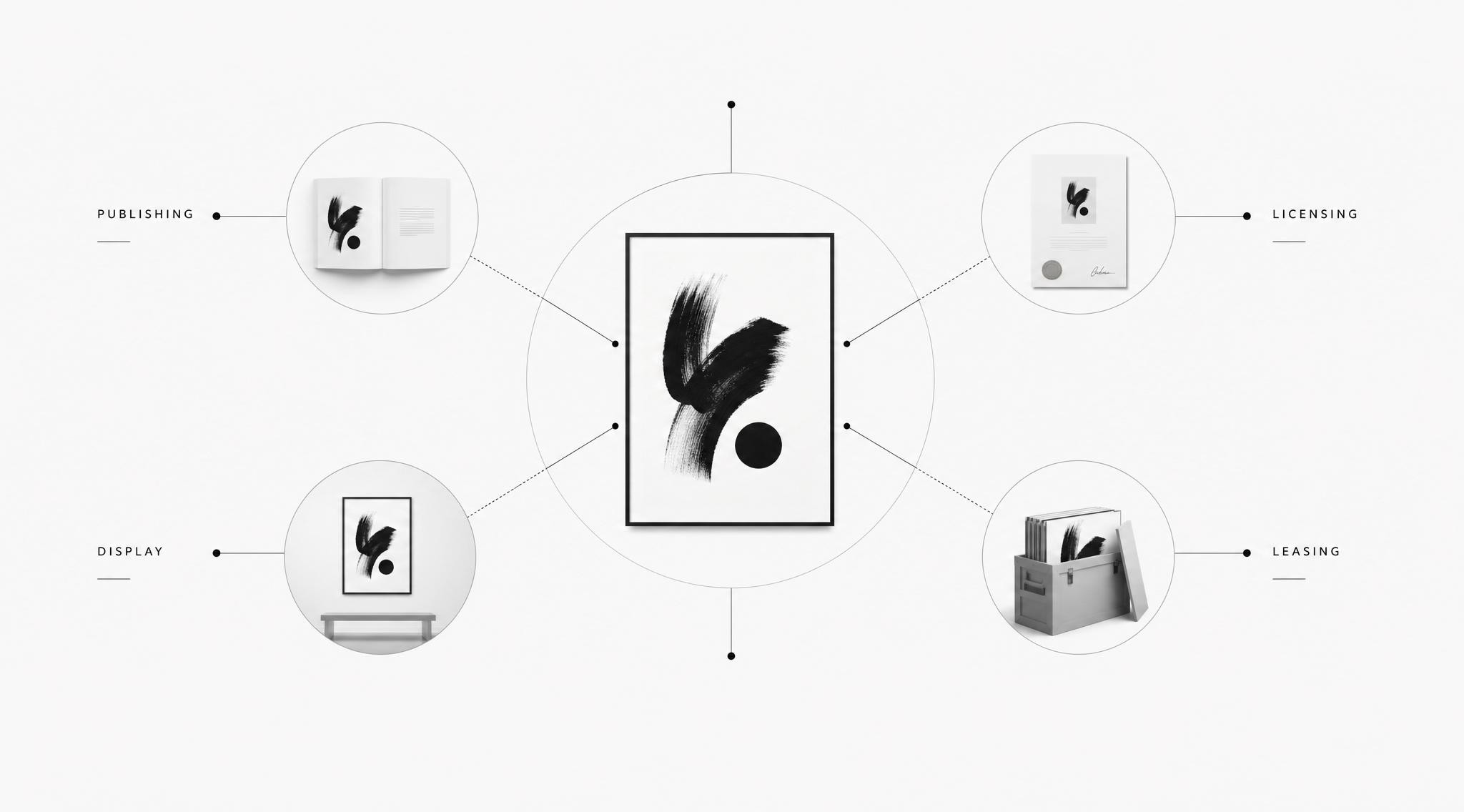
Comparatively, licensing is a model with a rather long history in the art and collectibles world, and it also offers an established path to recurring revenue. It allows an artist, gallery, or institution to monetize the image or intellectual property of a work without selling the original object and losing ownership.
The scale of licensing is quite significant in numbers. While not only limited to art, Licensing International reported that global licensed merchandise and services reached approximately $369.6 billion in 2024, up from $356.5 billion in 2023.
Source: Licensing International
In the case of art sellers, licensing can apply to things like prints, apparel, books, packaging, exhibitions, digital content, or brand collaborations. It requires clear rights of management, but it changes the economics of a work, turning it into an asset with potential to generate revenue for the creator over time. The artwork is no longer only an item in the inventory, it becomes intellectual property.
When it comes to physical works, licensing takes the name of leasing, and it applies a similar logic.
Instead of waiting for one final buyer, a gallery or seller can place artworks in offices, hotels, restaurants, clinics, or private spaces for a recurring fee. The work remains available as an asset, but begins generating revenue before a sale occurs.
Rise Art states that rental fees often range from 5% to 10% of the artwork’s value per month, while TurningArt states that artists can earn 25% of the retail price of a physical artwork over a yearly lease, paid monthly.
Sources: Rise Art, TurningArt
For B2B sellers, this is especially relevant. Many corporate clients prefer flexible access, rotation, and recurring payments over permanent acquisition.
Provenance as a fundamental part of the business model
No matter the business model, at the end of the day, it all depends on trust.
The same way a licensee needs to know who controls the rights, a company leasing a work needs to know what the object is, and also where it came from. In the case of collectors it’s the same, as they need confidence in authenticity. And in the case of sellers, well, they know how important trust is for any potential buyer.
And here is where provenance becomes more than documentation.
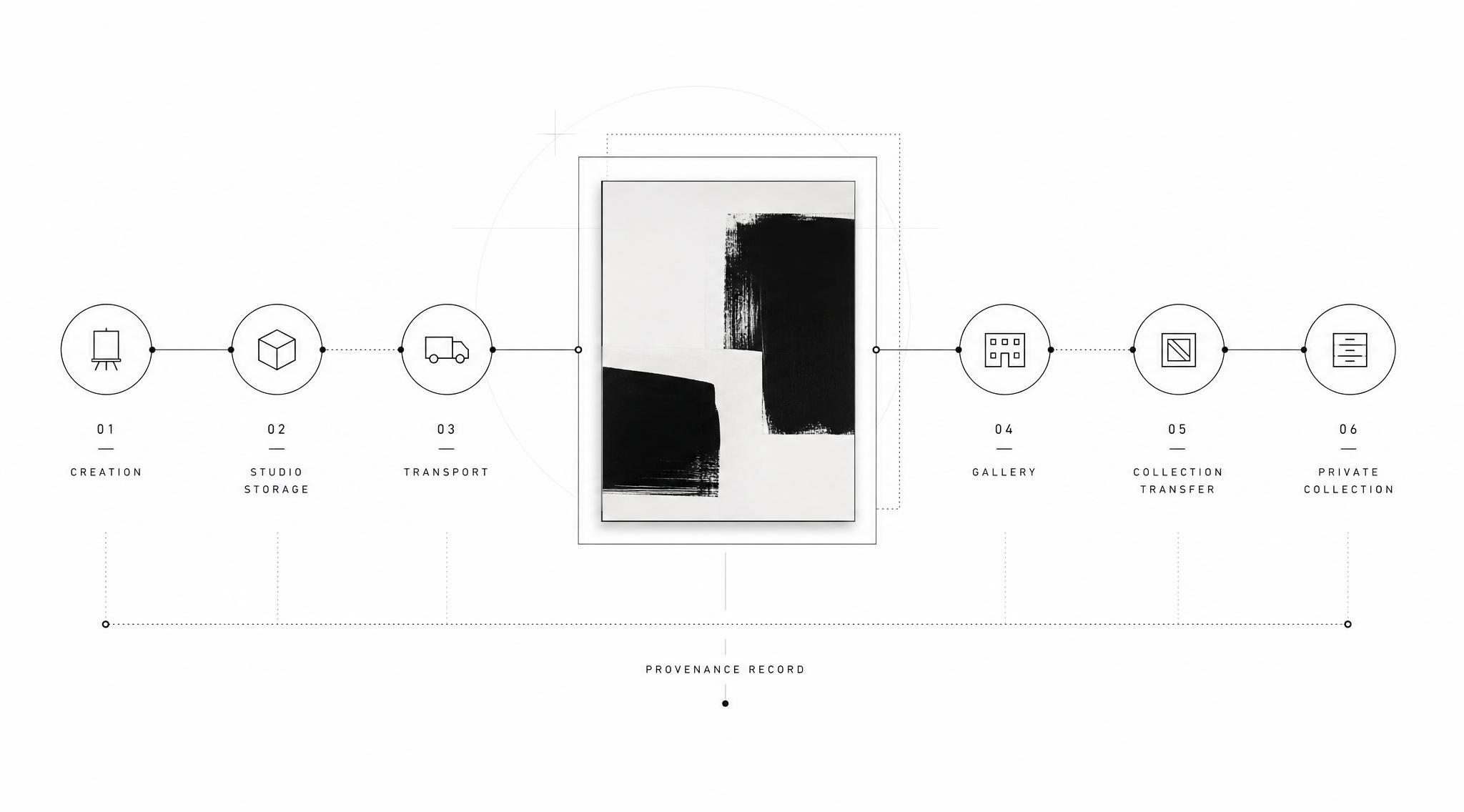
While in a traditional sale provenance supports the transaction, in a long-term revenue model, provenance supports the asset’s entire commercial life. It helps preserve authenticity, ownership history, exhibition records, transfers, and any other events that may contribute to future value.
This is also why blockchain-based provenance tools have become relevant in recent years. By creating persistent asset records, these systems can make it easier to connect an artwork or cultural asset to its history, ownership changes, and future commercial events.
Startbahn’s Startrail is one example of this approach. It issues blockchain-based certificates that can preserve records related to authenticity, ownership, provenance, exhibitions, transactions, restoration history, and other events connected to artworks and cultural assets.
Source: Startbahn Startrail
For recurring revenue to work around a single piece of work, the object itself needs reliable records: the asset’s identity, history, and rights need to be trackable and verifiable over time.
A possible answer to this question relies on an otherwise unsuspected candidate.
What the NFT boom revealed about long-term value
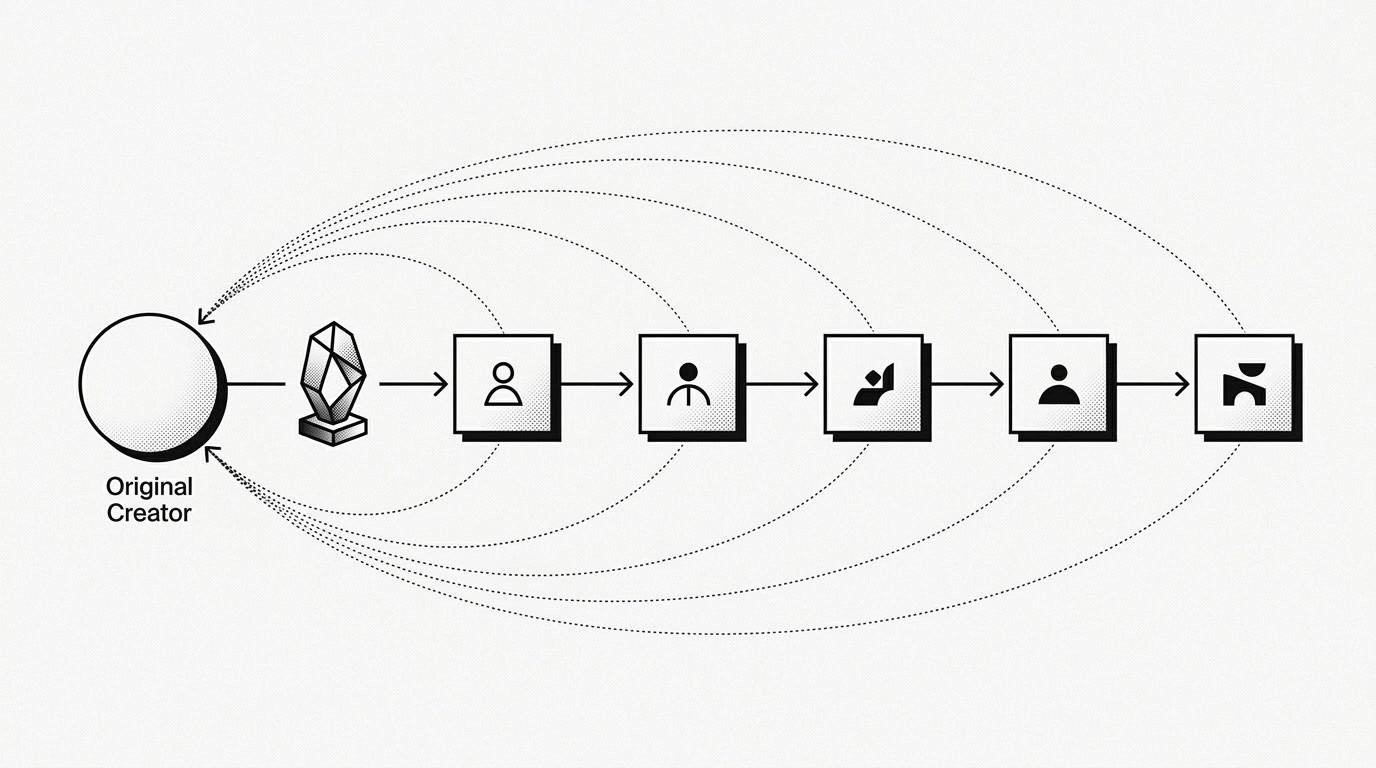
Remember the NFT boom a few years ago? It was controversial, and much of the attention around it was driven by speculation. But beyond the hype, it introduced one idea that remains directly relevant to recurring revenue in the art market: creators could participate in value generated after the first sale.
In many NFT marketplaces, creator royalties were designed to give artists a percentage of secondary sales. In practice, this meant that when a digital work was resold, the original creator could receive a share of the resale price. The execution of this model has been inconsistent across platforms, and enforcement has often depended on marketplace rules rather than the token alone. Still, the commercial idea was important: It challenged the assumption that the artist’s economic relationship with a work must end at the first transaction.
The relevant point here is not speculation, but resale participation. If artworks and cultural assets can be connected to reliable records, clear terms, and trusted transaction infrastructure, then future sales can become part of the asset’s revenue model instead of events that happen completely outside the seller’s reach.
This in turn, connects back to provenance. Recurring value depends on knowing the truth about the asset: who created it, who owns it, and what should happen when the ownership changes. Whether the asset is digital or physical, long-term monetization requires durable links between the work and its history, while also preserving its commercial terms.
Shifting from single transactions to long-term asset relationships
While it looks like the art market is not moving away from the traditional sales model any time soon, there are many signs that say it is shifting away from the assumption that a sale is the final economic event in the life of a work.
For art sellers, this changes the commercial question.
The goal now is transforming into selling the work while preserving a clear connection to the value, so it may continue to create more value after it leaves the first seller’s hands.
This is the deeper shift behind recurring revenue in the art market: a move toward treating artworks as long-term assets, where trust and provenance carves the path for further value in the future.